Recycled Fabrics in Sportswear: Building a More Sustainable Future
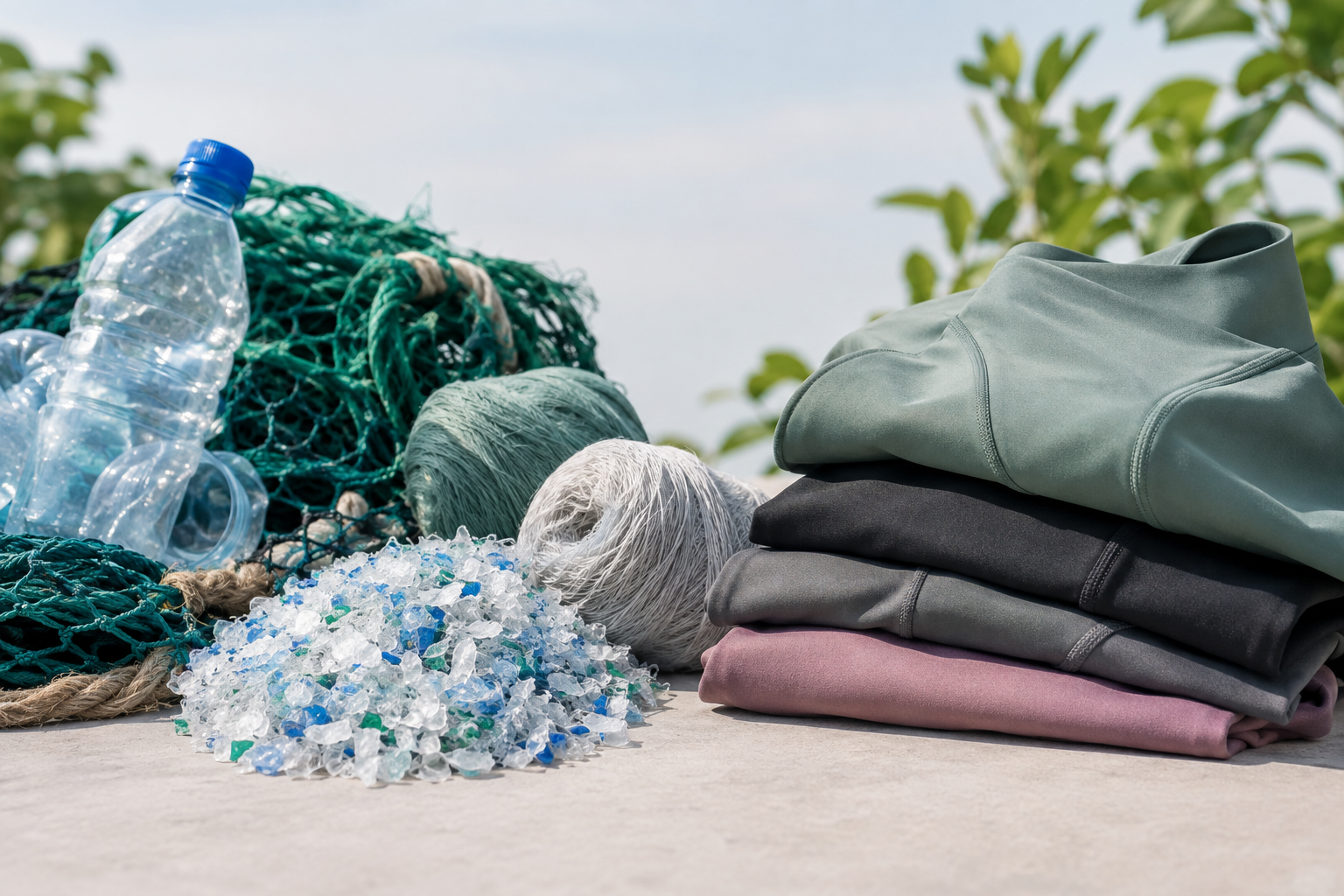
Pick up a pair of leggings today, and there's a decent chance they started life as something else entirely. A plastic bottle, maybe. An old fishing net. Offcuts from a factory floor that would otherwise have gone straight to landfill. It sounds like a strange origin story for something you'd wear to the gym, but recycled fabrics in sportswear have quietly moved from a niche experiment to a genuinely mainstream choice.
This didn't happen overnight, and it didn't happen just because it sounded good in marketing copy. Recycled fibres had to actually perform, stretch properly, wick moisture, survive hundreds of washes before serious sportswear brands would touch them. Much of that groundwork is done now, and what's left is a more interesting conversation about how these fabrics work, where they fall short, and what buyers need to know before building them into a range.
Why Recycled Fabrics Matter in Sportswear
Sportswear has a genuine sustainability problem, and it's not a small one. Most performance fabric is synthetic, which means it's made from fossil fuels, doesn't break down easily, and sheds microplastics with every wash. Producing that fabric from scratch each time only adds to the demand for virgin petroleum-based materials.
Recycled fabrics interrupt that cycle in a couple of genuinely useful ways. They reduce the need for new raw material extraction, and in the case of fabrics made from plastic bottles or fishing nets, they pull existing waste out of circulation rather than leaving it to sit in landfill or the ocean. Manufacturing recycled polyester also generally uses less water and energy than producing virgin polyester from scratch.
None of this makes sportswear automatically sustainable, there's a lot more to that picture, but it's a genuinely meaningful place to start, and it's exactly why so many brands have made it their first serious sustainability move.
Which Recycled Fabrics Are Used in Sportswear?
Two materials dominate this space right now, and they show up in very different parts of a typical sportswear range.
Recycled Polyester
Recycled polyester, often labelled rPET, is by far the more common of the two. It's usually made from post-consumer plastic bottles, though increasingly also from textile waste, broken down, spun into new fibre, and woven or knitted much like virgin polyester.
It shows up everywhere in sportswear, leggings, t-shirts, jackets, lining fabrics, largely because it behaves so similarly to virgin polyester that most brands can swap it in without redesigning anything.
Recycled Nylon
Recycled nylon, sometimes sold under branded names, is typically made from sources like fishing nets, carpet offcuts, and industrial nylon waste. It's more technically demanding to produce than recycled polyester, and it tends to show up in more performance-specific pieces, swimwear, technical outerwear, and compression garments, where nylon's particular stretch and strength properties genuinely matter.
It's a smaller share of the recycled fabric market than rPET, mostly because the recycling process is more complex and the supply of usable nylon waste is more limited.
How Do Recycled Fabrics Perform?
The honest answer is that quality recycled sportswear fabric performs remarkably close to its virgin equivalent, close enough that most people wearing it would never notice a difference.
Moisture-wicking, stretch, and breathability all depend far more on how a fabric is engineered, the knit structure, the finish, the blend, than on whether the base fibre was recycled or virgin. A well-made recycled polyester performance fabric can genuinely go head to head with a virgin one on comfort and function.
Where a gap can still show up is at the lower-quality end of the market, cheaper recycled fabrics that haven't been engineered as carefully can feel thinner, pill faster, or lose shape sooner. That's less a problem with recycled fibres inherently and more a reminder that fabric quality still varies enormously, recycled or not, and sourcing carefully still matters.
What Should Sportswear Brands Consider When Sourcing Recycled Fabrics?
Recycled Content and Certification
Not every fabric labelled "recycled" tells the whole story. Percentages vary considerably; some fabrics are close to 100% recycled fibre, others blend in a much smaller amount, and it's worth actually asking rather than assuming. Certifications like the Global Recycled Standard exist specifically to verify these claims and trace the recycled content back through the supply chain. Suggested read: how brands are building transparent supply chains to back these claims up.
Fabric Composition and Performance
Recycled content is only one part of the picture. Brands still need to check the same things they always would: weight, stretch percentage, moisture-wicking performance, and colourfastness, against what the finished garment actually needs to do. A fabric being recycled doesn't excuse it from meeting the same performance bar as anything else.
Durability and Product Lifespan
A genuinely sustainable fabric choice falls apart, literally, if the finished garment only lasts a handful of wears. Durability testing matters just as much here as with any other fabric, arguably more, since a big part of the sustainability argument depends on the garment actually lasting.
The Challenges of Recycled Sportswear Fabrics
It's worth being honest about where this category still struggles. Supply can be inconsistent, particularly for recycled nylon, where usable waste sources aren't always reliably available at scale. Costs also tend to sit higher than virgin equivalents in some cases, largely due to the complexity of the recycling process itself.
There's also a genuine end-of-life problem still largely unsolved. Recycling a garment back into new fibre again, true fibre-to-fibre recycling rather than downcycling into something lower value, remains technically difficult, especially for blended fabrics that mix multiple fibre types together. A lot of what's called "recycled" today is really recycled once, not recyclable indefinitely.
And there's a genuine risk of greenwashing in this space too. A small percentage of recycled content dressed up as a brand's whole sustainability story doesn't hold up well under real scrutiny, and increasingly informed customers are starting to notice the difference.
The Future of Recycled Fabrics in Sportswear
The direction of travel here is fairly clear. Fibre-to-fibre recycling technology is improving steadily, aiming to solve the blended-fabric problem that currently limits true circularity. Recycled nylon supply chains are slowly maturing as more manufacturers invest in processing capability.
Brands are also getting more sophisticated about traceability, moving past a generic "made with recycled materials" label toward specific, verifiable claims backed by proper certification. That shift matters, because it's what actually separates genuine progress from surface-level marketing.
Recycled fabric isn't a finished solution to sportswear's sustainability problem, it's one meaningful piece of a much larger picture that still includes durability, repairability, and what happens to a garment at the actual end of its life. But it's a piece that's matured fast, and it's not going anywhere.