Digital Product Passports in Sportswear: Preparing for Greater Transparency
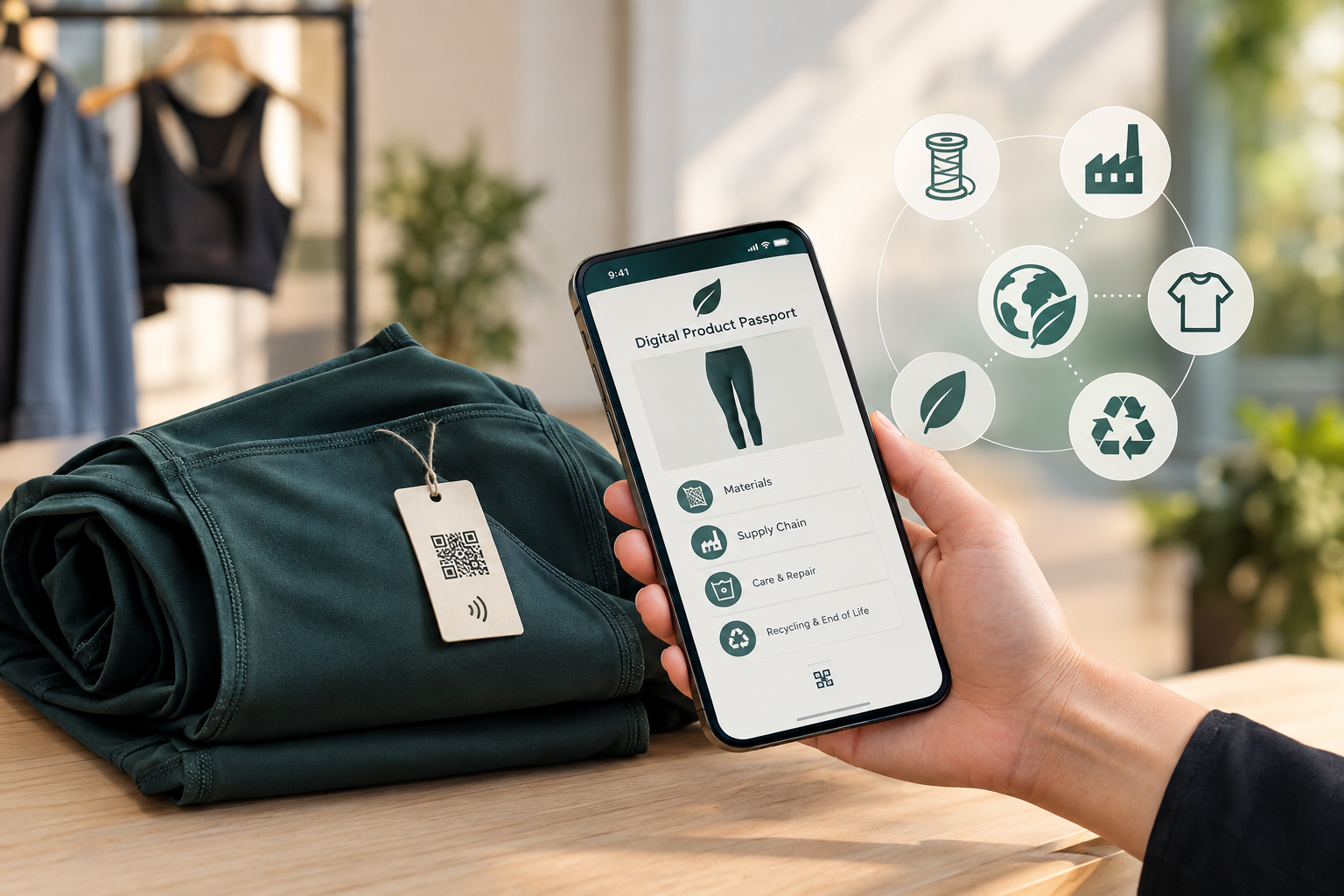
Pick up a pair of running leggings and ask yourself: what are they made of, where were they made, and what happens when you're done with them? Right now, the label gives you a few clues and not much more. That is about to change.
The EU is bringing in Digital Product Passports, a simple digital record that travels with a product and answers those questions. For anyone making or selling sportswear, it's worth getting ready early. This blog explains what a digital product passport for sportswear is, what it could include, and what brands and manufacturers can do now.
What Is a Digital Product Passport?
- A Digital Product Passport (DPP) is a digital record that holds key information about a product.
- You access it by scanning a QR code, NFC tag or similar marker on the item.
- Think of it as a product's ID card. It tells you what the product is made of, who made it and how to look after it.
- It can also explain how to repair, reuse or recycle the item.
- It comes from the EU's Ecodesign for Sustainable Products Regulation (ESPR). Textiles and apparel are one of the first product groups in line.
- The idea is simple: clearer, more reliable information for regulators, businesses and shoppers.
Why Digital Product Passports Matter for Sportswear?
- Sportswear is complex. Most activewear mixes fibres like polyester and elastane, plus coatings, prints, bonded seams and trims. That makes it hard to know what's in a garment and how to recycle it.
- Sustainability claims are everywhere. "Recycled," "eco" and "responsible" appear on lots of products. A passport gives brands a way to back up those words with proof.
- Shoppers want to know more. People increasingly ask where their kit comes from and how long it will last.
- It supports a circular model. Good data on materials makes repair, resale and recycling much easier.
- It's coming to the market. If you sell into the EU, you'll need to meet the rules, wherever you're based.
What Information Could a Sportswear DPP Include?
The final list isn't fixed yet, but here's what's likely. A May 2026 EU study has already suggested around 49 data points for textile products, grouped into a few main categories.
- Product details: name, model, batch and a unique product ID
- Who made it: brand, manufacturer and importer details
- Materials: fibre content, for example the exact mix of polyester and elastane
- Substances of concern: chemicals that need to be flagged
- Where it was made: factories and key steps in the supply chain
- Environmental information: things like durability, recycled content and microfibre shedding
- Care instructions: how to wash and dry it so it lasts longer
- Repair and end-of-life guidance: who can repair it, and how to recycle it
For sportswear specifically, details like performance finishes, fibre blends and recycled content claims will matter a lot.
How Digital Product Passports Could Improve Sportswear Supply Chain Transparency?
- Everyone shares one set of facts. Fabric mills, factories, brands and recyclers can all work from the same data.
- Claims become easier to check. If a product says "made with recycled polyester," the passport can show the evidence.
- Problems are easier to trace. If a material fails a safety check, you can find which products are affected faster.
- Fewer surprises for buyers. Clear supplier information helps brands spot gaps early, which fits well with regular factory audits.
- Better recycling. Recyclers who know exactly what a garment contains can sort it properly instead of guessing.
- Stronger trust. Open information is good for retailers, customers and the brand's reputation.
What the EU's Digital Product Passport Rules Mean for Sportswear Brands?
Here's the simple version of where things stand.
- The ESPR is already law. It sets the overall framework.
- The exact rules for textiles will come in a separate piece of legislation called a delegated act. It's still being developed, and it's currently expected around 2027.
- Once it's adopted, brands will get a transition period. Most current estimates point to obligations starting around 2028 to 2029.
- The rules apply to products sold on the EU market, including those made outside the EU.
- The manufacturer or, if they're outside the EU, the importer will generally be responsible for the passport.
- A central EU registry for passports has gone live in 2026, so the basic infrastructure is being built.
Dates in this area have moved before and may move again, so keep an eye on official updates.
What Sportswear Brands and Manufacturers Should Do Now
You don't need a perfect system today. You do need a starting point.
- Map your products. List your key styles and what goes into them.
- Gather material data. Start with fibre content, suppliers and certificates.
- Talk to your suppliers. Ask what data they can already provide, and where the gaps are.
- Clean up your records. Consistent product codes, names and spreadsheets make everything easier later.
- Simplify where you can. Fewer fibre blends and fewer trims mean less data to manage.
- Check your claims. Make sure any sustainability statements are backed by evidence.
- Pick a pilot. Try a passport on one product line first, and learn from it.
- Choose flexible tools. Standards are still being finalised, so avoid anything that locks you in.
- Follow the news. Keep an eye on EU and industry updates as the rules firm up.
Challenges of Implementing Digital Product Passports in Sportswear
- Messy supply chains. Sportswear often involves many tiers, from fibre to fabric to finishing, and information gets lost along the way.
- Missing data. Many suppliers don't yet collect or share detailed material and process data.
- Unclear rules. The final requirements aren't set, so it's hard to know exactly what to collect.
- Cost and time. Smaller brands and factories may struggle with the systems and staff needed.
- Different systems. Every partner may use different formats, which makes sharing data harder.
- Verification. It's one thing to record a claim and another to prove it.
- Keeping it current. Passports need updating if materials, suppliers or repair information change.
- Data security. Businesses need to decide what to share publicly and what to keep protected.
How Digital Product Passports Could Change Sportswear Manufacturing
- Data becomes part of the job. Factories will need to record materials, batches and processes more carefully.
- Suppliers get more involved. Fabric and trim suppliers will be asked for more information, and more often.
- Design choices shift. Simpler, more recyclable products become more attractive when their material data is on show.
- Traceability improves. Clear records from fibre to finished garment become a selling point.
- Sustainability claims get tested. Factories that can prove their practices will stand out.
- New services appear. Repair, resale and take-back programs become easier to run when product information is easy to access.
For manufacturers, good data could soon matter almost as much as good stitching.
Preparing for a More Transparent Sportswear Industry
- Digital Product Passports are a big change, but they're also an opportunity.
- Brands and manufacturers who get their data in order early will find it easier to adapt.
- Start small, stay curious and work closely with your partners.
- Transparency is not just about meeting a rule. It's about earning trust from the people who wear your products.
The sportswear industry is moving toward a future where every garment can explain itself. The sooner you start preparing, the smoother it will be.